How to choose a builder…Planning a home renovation

How to choose a builder


Are you looking to renovate your home or business in the near future and don’t know where to start? Here’s a few helpful tips to help you choose the right builder for you.

Looking for inspiration for your bathroom and home renovation? Take a look through our past project case studies.

Looking to hire RedBox for your next project? Check out our reviews on Houzz 


.

  1. Seek recommendations
    As you would when hiring any tradesman, the first step you should take when looking for a builder is to ask for recommendations.You can also lookat Which? Trusted Traders https://trustedtraders.which.co.uk/for reviews and verified tradesmen.if you’ve already hired an architect or designer for the project – they should be able to recommend a builder they have worked with previously also.
  2. Check their credentials
    Once you have a prospective builder set up, don’t forget to do your due diligence before signing any agreements.You can verify they’re a legitimate registered company by visiting the Companies House website at www.companieshouse.gov.uk and of course websites such as Which? Trusted Trader are a useful resource as above.


Ask the builder for information on previous projects, where possible images or a site visit, and access to testimonials or where possible a chance to speak to a previous customer that has a completed job – ideally more than 12 months ago – as it can take a year for the house to settle and any cracks to show.


Check also they have they have appropriate insurance to protect against liabilities incase anything goes wrong.


This should include:

  • Employers Liability
  • Public/Products Liability
  • Excess Public Liability
  • Contractors All Risk Liability

[vc_single_image image=”9520″ img_size=”full”][vc_single_image image=”9374″ img_size=”full”][vc_single_image image=”9364″ img_size=”full”][vc_single_image image=”9509″ img_size=”full”]3.  Payments
Your contract should include a payment structure that both yourself and your builder have agreed.

Good practice is usually to offer up to a maximum of 10% up front, followed by payments based on agreed goals reached.  As the stages progress the payments progress.

I.e first payment after the initial groundwork is completed, walls being constructed and so forth.

Look out for a builder who expects you to make a substantial payment upfront. This could be a sign they do not have the cash flow to start the project with their suppliers – or they are planning to take your money and run.

Ensure you get everything in writing, mutually signed and copied and keep everything in a safe place –you may want to consider hiring a project manager to help liaise with the builders and keep track of the progress.


4. Check if they employ their workers or subcontract

If you’re using a small to medium sized business they should have 3 or 4 projects on the go at any one time, with at least 2 or 3 full time workers at each site (on average about 10 employees).  If they have less than this, they could rely on heavily  on subcontractors which could put the quality at risk.

However, if they are using subcontractors it’s not always a bad thing, you just need to ensure they have they have all the relevant documents and plans before they begin, and make sure you find out who is responsible should any work be substandard. Also check that the builder will be overseeing the project you have hired them for – if not consider an alternative company or insist on a meeting with the actual project manager to ensure regular communication and checks are being done.


5.  Plan ahead and help things go smoothly.

What should your builder need from you?  Good quality drawings and diagrams of the project you want completing, make sure the architect is giving the appropriate detail, specifications and requirements, the more details you provide and fine tune – the more accurate a job the builder can complete.

Remember, employing a builder can be stressful – but if you do you research and planning this should make the entire process smoother, and quicker.If you are planning to do work in your home planning is key, we hope these tips and ideas for  home renovation and home improvements. Feel free to drop us an email or give us a call to start discussing your project for a free quotation.

For inspiration see some of our website and Instagram photos as these can really help with inspirational ideas.   If you would like more ideas or advice, then, by all means, drop us an email with a list of what you’d like to achieve, and we’ll advise you as to how to make your budget stretch as far as possible.
CONTACT RED BOX

Home Renovation Tips for planning your new bathroom and shower options

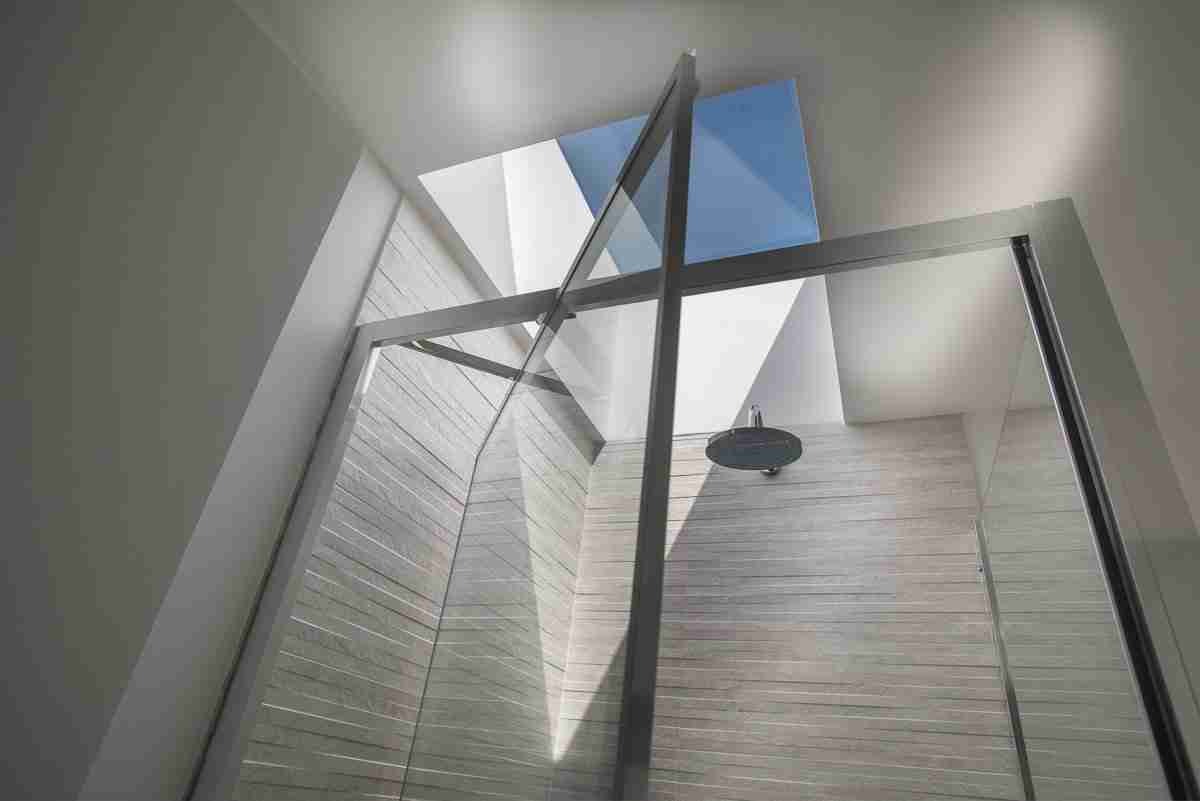
Bright stairwell with glass balustrade and roof glazing in a Fulham house renovation

How to choose the right shower for your bathroom and home renovation?


Recently, many homeowners are switching their bathrooms over from a bath to a shower.  If you are planning a new bathroom and looking for a new shower – here are a few things to consider when browsing home renovation shower and bathroom options.

Here’s our tips and information to help you choose your new shower

First thing to consider, what type of water system do you have?

Before buying a new shower, you need to consider the water system already in place at the property. This will affect what models you can select.

For example, an electric shower will work with any water system – but mixer or digital showers need a high pressure water system.


Looking for inspiration for your bathroom and home renovation? Take a look through our past project case studies.


.

  1. What is an electric shower?

Electric showers are an economical solution – they heat the cold water supply on demand.
As you are only heating the water you need for the shower; you do not waste as much energy.

Benefits:

  • On demand hot water – you do not need to switch on the hot water and wait for the boiler to heat up to take a shower.
  • Fairly Easy and quick to install.
  • Can be economical & therefore good for the environment
  • Can work with a low pressure water system.


  1. What is a Mixer shower?

A mixer shower takes both hot and water supplies blending it to the required temperature when needed. They tend to be a little more stylish than the electric shower designs.

Mixer showers are perfect for any home with a hot water supply but work better with a high pressure water system. However, some models are also available to work with a low-pressure water system so make sure you check before buying.

Benefits:

  • Modern designs with advanced functions
  • Look better than electric shower units.

Note to consider: Mixer showers do not have their own hot water supply, so if your boiler is slow to heat up or breaks down – you will be left with cold showers.

If you have got an unreliable boiler, it might be time to replace it, or consider another shower type.[vc_single_image image=”7713″ img_size=”full”][vc_single_image image=”7710″ img_size=”full”][vc_single_image image=”7707″ img_size=”full”][vc_single_image image=”7709″ img_size=”full”]

  1. What are Power Showers?

Power showers work similarly to mixer showers in that they combine hot and cold water supplies.  However, they differ in that they contain a pump to boost the flow of water through the shower head.  This is a great option for homes with low-pressure water systems.

There are two types of pumps – plastic or metal. Plastic of course is cheaper and can be noisier whilst the metal options are a more expensive but will likely last longer and be quieter.

Benefits:

  • Ideal for low-pressure water system homes
  • Boosts the water pressure for a stronger shower.
  • Combines hot and cold water supplies.

Note to consider: Power showers are a lot more expensive than electric or mixer showers, and they also use a lot more water.  This type of shower costs a lot more to run and uses more energy – therefore is not as good for the environment or your heating/water bills.


  1. What are Digital showers?

The latest innovation in shower design, the Digital shower, offers features including precise temperatures and wireless control units that can be installed anywhere in your bathroom.

They work in a similar way as the mixer and power showers, taking water from your hot and cold water supplies but the bonus is you can specifically set the ideal temperature and get it right every time before even setting foot in the shower.

Benefits:

  • Accurate water temperature
  • Wireless access to set temperature before getting in the shower.
  • Control unit can be hidden from sight to help match a sleek bathroom design.
  • Ideal for low pressure systems
  • Often includes a pump turning them into digital power showers.

If you are planning to do work in your home planning is key, we hope these tips and ideas for  home renovation shower and bathroom options has helped, reach out to start planning your bathroom renovation.

For inspiration see some of our website and Instagram photos as these can really help with inspirational ideas.   If you would like more ideas or advice, then, by all means, drop us an email with a list of what you’d like to achieve, and we’ll advise you as to how to make your budget stretch as far as possible.

CONTACT RED BOX